MFA Courses
“Read a thousand books and your words will flow like a river.”

Our two-year, 48-credit online MFA in Creative Writing sets itself apart by teaching from a foundation of consciousness and creativity, developing the poet/writer holistically. We use meditation as a tool to help students access their creative imaginations. All of our faculty and students practice the Transcendental Meditation technique, which settles the mind, enhances clear thinking, and heightens creativity. Many poets and writers have written about their need to go deeply inward to create. The mind’s freedom to leap to surprising, fresh associations is greatly facilitated by its ability to transcend. It’s by tapping deep levels of creative imagination that writers/poets can bring out stories, ideas, images, and metaphors with the power to move, transform, and bring change.
Our faculty are highly credentialed and accomplished working poets and writers who deeply understand the creative process — not just inspiration, but especially the fine-tuned labor of honing craft and technique. We believe that an inclusive, nurturing, yet challenging and stimulating learning environment supports students to experiment with craft freely and to mine their subject matter deeply. This approach stimulates creativity, productivity, and discovery. It helps students find their authentic voice and pushes them into innovative approaches that will make their work stand out. We stimulate meta-cognitive awareness through self-evaluation. We also use a unique narrative evaluation system that encourages risk-taking, experimentation, self-referral, and self-reliance. Beyond this, our MFA makes room to nourish the part of the writing process that cannot be taught: the ineffable energy and life force — ‘duende,’ as the Spanish poet Federico García Lorca called it — needed to bring writing to life and make it great. Our aim is to nurture the unimaginable and help students journey so deeply within themselves that they can find words to say the unsayable.
On a pragmatic level, the online MFA model offers unique advantages. Students can flexibly complete the requirements of a high-quality MFA while balancing life and work commitments in their home communities. Assignments can be completed asynchronously while regular classes bring everyone together online. In this way, our MFA provides both the nurturing literary community and the solitary discipline of writing that working poets and writers require.
Each semester starts with a two-week online residency (students are required to attend five residencies during the program). Each residency offers flexible modes; students can attend in person or, if their work schedules don’t allow, asynchronously and at their own pace. Prestigious visiting poets and writers offer advanced workshops, master classes, craft talks, panels, and readings. Our residency guests have included a great variety of authors: Chitra Banerjee Divakaruni, Mark Spragg, Eugenia Kim, Susanne Paola Antonetta, Debra Marquart, Tiffany Midge, David Mura, David Kirby, Barbara Hamby, Carolyn Holbrook, Danusha Laméris, Molly Fisk, Francesca Bell, Rafael Gonzalez, Kim Shuck, Linda Noel, and many more.

While residencies provide bonding, nourishment, and inspiration, at the core of our semesters are immersive mentorships that give students the unique time and opportunity to work on book-length manuscripts under professional guidance. Mentorships are individualized, limited to six students each, and structured for optimum social interaction and accountability. Mentorships focus mainly on writing and revision, but also include craft talks, reading, and craft analysis in support of students’ creative work. We encourage diverse voices and offer students alternatives to the traditional workshop model in order to empower under-represented voices.
Aside from the residencies and mentorships, students take additional online courses that prepare for the writing life. In the first and second semesters, these classes delve into the creative process. After that, students take literary theory, publishing practicum, social media marketing, publishing and professional presentation, and more. The program stimulates social awareness in a writing outreach, which can serve as a brief internship or a teaching practicum. Our writing pedagogy course helps students prepare a teaching portfolio before they exit the program.
The MFA offers specialization options in poetry, fiction, and creative nonfiction, plus a dual genre track. We strongly support cross-genre exploration. All assignments and requirements of the program support the launching of a career — a student’s journey from aspiring poet or writer to author. The MFA thesis is a book-length manuscript of publishable quality. Students also write a critical introduction to the thesis, contextualizing their own process, and they create online author platforms as well as marketing plans for their books. During the capstone residency, students teach master classes on craft and give public readings of their thesis work.
The MFA is a terminal degree in the field that prepares students for a variety of possible careers, including (community) college and university teaching, freelance writing, magazine or book editing, publishing, coaching, advertising, public affairs, and more. Our visiting authors and faculty model what it means to be a writer in the world and how to choose career paths that support and augment the writing life. Alumni of our program remain part of our inclusive, creative, and dynamic literary community.

Below you can find the following:
Graduation Requirements
List of Courses
Featured Courses
Catalog Descriptions of Courses
Graduation Requirements & Course List
To qualify for the MFA in Creative Writing, students must successfully complete all requirements for the Master of Fine Arts degree (please refer to “Degree Requirements” in “Academic Policies” in MIU’s online catalog). Students are required to produce a Professional Portfolio that should include the following:

A Thesis, an original creative work of publishable quality in the student’s chosen genre(s) of emphasis (60–150 pages in length depending on genre).
A Critical Introduction to the Thesis, a 2,500-word analysis of a student’s creative process and choices of craft, giving the thesis a scholarly and literary context.
A Professional Portfolio: The professional portfolio will most likely include some or all of the following:
1. Writing Pedagogy Portfolio: a sampling of curriculum development including lesson plans, syllabus, rubrics of learning objectives and outcomes, assessment, an outline for a master class, plus a statement of teaching philosophy. This is for students who took Writing Pedagogy, a requirement that can be waived only with permission of the program director.2. An Online Portfolio: a social media platform including a website, a CV, links to active social media pages, a blog, and samples of (published) work.
Students are required to participate in or present the following:
A Public Reading of creative work scheduled during the capstone (5th) residency.
A Master Class on an aspect of craft taught during the capstone (5th) residency or in another setting. This is for students who took Writing Pedagogy and/or the Outreach, a requirement that can be waived only with permission of the program director.
A Writing Outreach (optional), which can serve as a brief internship or teaching practicum. In the third semester of study, students participate in a writing outreach where they use skills gained in the program in service of their local communities. Instead of the Writing Outreach, students can elect to take a Publishing Practicum.
Students must also complete 48 credits of coursework selected from the following online courses:
Online Residencies
8–10 credits of the following:

Residency 1: Advanced Creative Process — Exploring the Leaping Imagination (Required, 2 credits, online course)
Residency 2: Advanced Narrative — Transformational Storytelling in Fiction (Required, 2 credits, online course)
Residency 3: Unwrapping Form — Lyric Association, Braiding, Borrowing, and Experimentation (Required, 2 credits, online course)
Residency 4: The Writing Life: Turning Vision into Reality (Required, 2 credits, online course)
Residency 5: The Journey from Writer to Author (Required, 2 credits, online course)
Online Support Courses
16 credits of the following:

The Writer and the Self — Consciousness and Creative Process (Required, 2 credits, online course)
Literature and the Self — Literary Techniques that Expand Awareness Required, 2 credits, online course)
Every Page a Pulse — Imagine the Unimaginable, Say the Unsayable (Required, 2 credits, online course)
Literary Theory for the Creative Writer (Required, 2 credits, online course)
Writing Pedagogy — The Theory of Teaching Creative Writing (Required, 2 credits, online course)
The Socially Conscious Writer — Writing Outreach (Elective, 2 credits, online course)
The Writer in the World — Professional Development, Publication, and Presentation (Required, 2 credits, online course)
The Writer Online — Social Media Marketing and Strategy (Required, 2 credits, online course)
Publishing Practicum (Elective, 2 credits, online course)
Directed Study in Creative Writing (Elective, 2 credits, online course)
Writing Consciousness: A Queer Study of Emily Dickinson (Elective, 2 credits, online course)
Advanced Literature Mentorship (Elective, 2 credits, online course)
Transcendental Meditation, the Writer, and Creativity 1 (2 credits, online support course)
Transcendental Meditation, the Writer, and Creativity 2 (2 credits, online support course)
Mentorships
Our mentorships have two components: a creative writing workshop and a process mentorship offered together by the same mentor in the same genre. Students take mentorships in their chosen genre(s) of emphasis, but are allowed to enroll in elective mentorships with permission of the MFA Program Director. In the capstone semester, students take thesis courses and finish a book-length manuscript of publishable quality, plus write an introduction, contextualizing their process and choices of craft. Students who need more time to complete their thesis and introduction can take the extended thesis courses.
1) Advanced Creative Writing Workshops
16 credits of the following:

Advanced Poetry Workshop (4 credits, online course)
Advanced Fiction Workshop (4 credits, online course)
Advanced Creative Nonfiction Workshop (4 credits, online course)
Advanced Multi Genre Workshop (4 credits, online course)
MFA Thesis (Required, 4 credits, online course)
Extended MFA Thesis: The Self-Realization of the Poet/Writer (Elective, 4 credits, online course)
2) Advanced Process Mentorships: Reading & Craft Analysis
8 credits of the following:
Advanced Process Mentorship in Poetry (2 credits, online course)
Advanced Process Mentorship in Fiction (2 credits, online course)
Advanced Process Mentorship in Creative Nonfiction (2 credit, online course)
Advanced Process Mentorship in Multiple Genres (2 credit, online course)
Writing a Critical Introduction to the MFA Thesis (Required, 2 credits, online course)
Extended Writing a Critical Introduction to the MFA Thesis (Elective, 2 credits, online course)
Featured Courses

The Writer and the Self — Consciousness and Creative Process
This online course offers students a deep immersion in their own unbounded creative nature. Consciousness and creativity form the perfect foundation for a prolific writing life. Students track the path of transcending through the practice of Transcendental Meditation as well as through writing, reading, and creative process.

Advanced Creative Writing Workshop
Advanced Creative Writing mentorships are the heart of every semester of our program and offer full immersion in the craft and technique of poetry, fiction, creative nonfiction, or multi-genre, both in reading and in writing plus craft analysis. Students write original work and receive intensive feedback in one-on-one mentorship and online workshops with the aim of revising their work in-depth.

Advanced Narrative — Transformational Storytelling
In this residency, students explore the fundamentals of narrative — including character, plot, point of view, theme, style, and voice — with an emphasis on transformational storytelling, the quest motif, and approaches to crafting works of lasting value. The course also focuses on profluence and approaches to breaking narrative.

Every Page a Pulse — Imagine the Unimaginable, Say the Unsayable
This online course explores the ineffable force at the heart of great writing. Seminars examine Bly's poetics of the deep image, Rilke's idea of the combinatorial nature of creativity, and Lorca's "Theory and Play of the Duende," teaching you how to mine rich and complex material that is "in [your] veins" and "surges up from the soles of [your] feet."

Advanced Creative Process — Exploring the Leaping Imagination
The first residency starts with the heart of writing – the creative process itself. Poet Alan Shapiro said that writing allows us to focus on the "right here, right now, the deep joy of bringing the entire soul to bear upon a single act of concentration." Panel discussions, seminars, and workshops explore the inner world of the imagination and techniques to access the leaping mind.

Unwrapping Form — Lyric Association, Braiding, Borrowing, and Experimentation
This esidency explores form and the unwrapping of form in all genres. Seminars and craft classes cover hybrids; borderlands between genres; fixed form versus open form poetry; graphic memoir; sources and approaches; and profluence through association and theme. Workshops explore experimentation and crossing genre.
“Overall, Every Page a Pulse [a creative process class in the MFA program] was both enjoyable and meaningful because it got me thinking and writing in ways I have never thought and written before and, in some cases, in ways I had not thought and written in decades. It helped me reflect on the type of writing that comes naturally to me as well as the type of writing I want to challenge myself to pursue. More than anything, it reminded me that writing does not have to begin with an audience in mind. It can begin simply as an act of exploration, reflection, imagination, and meaning-making. The writing I most want to pursue is not for recognition or approval, but first for myself and for my children to one day read. If I eventually choose to share it with others, my hope is that some may find something meaningful in it for their own journeys, just as the writers, poets, storytellers, and artists whose work has shaped my life helped me better understand my own.”

The Socially Conscious Writer — Writing Outreach
Poets and writers are the voice of the future and can bring about positive change in the world. This online course explores social values and ethical dilemmas in the literary arts, stimulating social awareness and engagement. Students immerse in new perspectives and use their skills to realize a project they are passionate about.

Writing Pedagogy — The Theory of Teaching Creative Writing
This course offers a theoretical and historical background to different conventional and cutting-edge pedagogies from the fields of creative writing and composition studies, examining innovative models of teaching creative writing not limited to the workshop model, including alternatives to the traditional workshop.
Publishing Practicum
This course provides students with mentorship in literary magazine or anthology editing and an opportunity to solicit, review, and select submissions as part of a magazine's or an anthology’s operations. Editing, copy-editing, assembling submissions into a complete manuscript, presentation, marketing, and outreach are part of the course.

The Writer Online — Social Media Marketing
In today’s global world, writers have to know how to create a strong online platform so they can market themselves and their work effectively. This course teaches in-demand and innovative social media marketing skills and strategies that will promote career growth. In this course, students build their own platform as authors online.
The Writer in the World — Professional Development
This online course orients students to the profession of the poet/writer, covering such issues as work habits; the art of organizing and assembling a book; journal and book publication; job hunting; interviewing; the art of networking; and professional presentation through CVs, query letters, cover letters, pitching, and/or book proposals.

The Journey from Writer to Author
The capstone residency focuses on the journey of taking ideas from vision to fully realized books. Seminars and discussions deal with the questions that lie ahead after graduation. Our final residency offers a bolstering package of support for the writer embarking on the world. Graduating students teach a master class, give a public reading from their thesis, and celebrate their achievements.
Catalog Descriptions of Courses


Residencies
-
The first residency starts with the heart of writing — the creative process itself. Poet Alan Shapiro said that writing allows us to focus on the “right here, right now, the deep joy of bringing the entire soul to bear upon a single act of concentration. In that extended moment, opposites cohere: the mind feels and the heart thinks, and receptivity is a form of fierce activity. Quotidian distinctions between mind and body, self and other, space and time, dissolve.” This class explores the inner world of the imagination and techniques to access the leaping mind. How do you break through writer’s block and nourish creativity? Why is it essential to give yourself permission to experiment and make mistakes? Where do you find inspiration and how do you develop the healthy work habits of the professional poet/writer? Guest authors offer evening readings, teach master classes on various aspects of craft, and lead advanced workshops in three genres. Students also receive an orientation to the writing life — the profession of the poet or writer. (Required, 2 credits, online course)
-
The second residency focuses on the role of storytelling in fiction, creative nonfiction, and poetry. In seminars, craft classes, panel discussions, and writing exercises, students explore the fundamentals of narrative — including character, plot, point of view, theme, style, and voice — with an emphasis on transformational storytelling, the quest motif, and approaches to crafting works of lasting value. Master classes may cover the narrative poem; profluence in lyric prose; the fictionalized memoir; outlining, storyboarding, and the story arc; the Hero/Heroine’s Quest; how to develop a longer work (novel, memoir, or graphic novel); writing from life experience; and more. Guest authors offer evening readings, teach master classes on various aspects of craft, and lead advanced workshops in three genres. (Required, 2 credits, online course) Prerequisite: CW 501 Residency 1: Advanced Creative Process
-
The third residency explores form and the unwrapping of form in the genres of poetry, fiction, and creative nonfiction. Seminars and craft classes may cover topics such as hybrids; borderlands between genres; fixed form versus open form poetry; graphic memoir; sources and approaches; and profluence through association and theme. This residency also includes workshops on line break in poetry; Japanese minimalism and the image; the contemporary narrative poem; the lyric memoir or novella; and the lyric essay (including prose poem, braided essay, collage, and hermit-crab essay). Panels will be on the topics of experimentation, crossing genre, and breaking form. Guest authors offer evening readings, teach master classes on various aspects of craft, and lead advanced workshops in three genres. (Required, 2 credits, online course) Prerequisite: CW 502 Residency 2: Advanced Narrative
-
The fourth residency is named after Annie Dillard’s famous text about the life of the writer, a mandatory addition to every student’s reading list. What do authors have to say about the writing life? In seminars, panel discussions, and workshops, guest poets and writers talk about their writing routine and creative process, giving students pointers for success. Students learn basics about journal and book publication, conference attendance, and career strategies. This residency may include a panel on cutting-edge developments in the publishing industry and the future of book publishing; a panel with agents and publishers; a seminar on the value of corporate versus independent publishing houses; and/or a seminar or workshop on how to organize book-length manuscripts of poems, short stories, flash pieces, or essays into a cohesive collection. Guest authors offer evening readings, teach master classes on various aspects of craft, and lead advanced workshops in three genres. (Required, 2 credits, online course) Prerequisite: CW 503 Residency 3: Unwrapping Form
-
This capstone residency for graduating students discusses the journey of taking ideas from vision to fully realized books. Seminars and panel discussions deal with the questions that lie ahead after graduation: How do you carve out a career as a writer? How do you develop and finish your books? How do you find an agent and publisher? How do you deal with bills or rejections and still keep writing? How do you believe enough in yourself and your voice to birth your books into print? How do you market yourself once you have landed a publishing contract? The fifth and final residency offers a bolstering package of support for the writer embarking on the world. Guest authors offer evening readings, teach master classes on various aspects of craft, and lead advanced workshops in three genres. Graduating students teach a master class, give a public reading from their thesis, and celebrate their achievements. (Required, 2 credits, online course) Prerequisite: CW 504 Residency 4: The Writing Life
Online Courses
-
This first year STC course for the MFA in Creative Writing offers a general introduction to Consciousness-Based Education, exploring a new paradigm in which consciousness is primary. Principles of consciousness are examined through personal experience and scientific inquiry, plus considered in the context of mythology and literature — all with the aim of helping students unfold their own creative potential as poets and writers. In addition, this introductory course offers support with the practice of the Transcendental Meditation technique, plus an introduction to Maharishi yoga asanas and various healthy self-care routines beneficial to the writing life. Please note that STC 505 credits don’t add toward the MFA in Creative Writing’s graduation requirements. (Required for MFA students new to STC, 2 credits, online course)
-
This second year STC course for the MFA in Creative Writing delves more deeply into the relationship between consciousness and the creative process, helping students fine-tune their creative intuition. Accessing the most profound layers of oneself enhances the writing life, making it easier for poets and writers to problem-solve, leap to surprising and fresh associations, stay in the flow, adopt a sustainable writing routine, and find their authentic voice. Principles of consciousness are examined in-depth, both through personal experience and intellectual inquiry. Interactive assignments, readings, and exercises explore creative approaches to help students develop their full potential as poets and writers. This course includes refresher knowledge about the practice of the Transcendental Meditation technique and the process of transcending geared toward each student’s level of experience. The course also offers regular TM-checkings. Please note that STC 509 credits don’t add toward the MFA in Creative Writing’s graduation requirements. (Required for MFA in CW students who took STC 505, 2 credits, online course) Prerequisite: STC 505 Transcendental Meditation, the Writer, and Creativity 1
-
This online course offers students a deep immersion in their own unbounded creative nature. Consciousness and creativity form the perfect foundation for a prolific writing life. Students track the path of transcending through the practice of Transcendental Meditation as well as through writing, reading, and creative process. Every component of the course nudges students to open the faucets of creativity and rediscover the joy and bliss inherent in creative expression. This involves making mistakes, trying, and experimenting without self-censorship or push for perfection. This course starts the process of working through The Artist’s Way, a self-exploratory journey that teaches creative self-referral. Interactive assignments are designed to inspire a self-reliant, sustainable creative routine as well as a nourishing, authentic relationship between self, Self, and Muse. (Required, 2 credits, online course)
-
This online course examines consciousness through a literary lens, making connections between the craft of writing and the self and Self of the poet/writer. Textbook for the course is The Flow of Consciousness, a compilation of talks by Maharishi Mahesh Yogi on literature, writing, and consciousness edited by Rhoda Orme-Johnson and Susan Andersen. Seminars, readings, and interactive writing assignments explore literary techniques that poets and writers use to culture expansion of awareness: how sound offers a framework for silence; how rhythm and repetition push the mind to transcend; the function of the gap (white space, pause, cesura); the relationship between name and form; swings of awareness; the dynamism of opposites; and more. This course also completes the process of working through The Artist’s Way, a self-exploratory journey that teaches creative self-referral. (Required, 2 credits, online course) Prerequisites: STC 510 The Writer and the Self
-
This online course is designed to deepen the creative process by exploring the leaping imagination, the ineffable force at the heart of all great writing. Master classes, readings, and creative assignments examine Bly’s poetics of the deep image, Rilke’s idea of the combinatorial nature of creativity, and Lorca’s “Theory and Play of the Duende,” teaching students how to mine rich and complex material that is “in their veins” and “surges up from the soles of their feet” — not labor, but the fuel of passion pulsing through a work. Interactive exercises help students write in an authentic voice. Lectures cover subjects such as the relationship between memory and time, the function of the gap, metaphoric thinking, the power of holding opposites, shifting and expanding point of view, swings of awareness, turns and surprises, refined perception, witnessing, point of view, and the I/eye of poem or story. The course also touches on the transformational power of myth, story, and image. (Required, 2 credits, online course)
-
This online course explores the ways that literary theory and analysis are intrinsically relevant to the field of creative writing, enriching discussion, the workshop experience, and creative work. The class covers interpretation, authorial intention vs. reception and reader response, textuality and intertextuality, as well as assumptions about language and the manifold aspects of self and identity. Aim is to give insight into the history of literary traditions and help students examine through different lenses the genre(s) in which they themselves write, offering wider context. An in-depth examination of identity in poetry and prose questions social conditioning and assumptions. The course also looks at teaching methodologies of writing influenced by literary theory. (Required, 2 credits, online course)
-
This online course is an exploration of Emily Dickinson’s work through a queer lens, both as a literature class and a generative space where you are invited to examine and dialogue with Dickinson’s themes, observations, and style in your own work. Emily Dickinson is one of the most beloved mystical and modern poets on this continent. The course incorporates stories about her life, essays about her gender and identity, material from Figuring by Maria Popova about the poet’s personal life and creative process, plus of course Dickinson’s own letters and poems. Students are asked to adopt Dickinson’s keen powers of observation, fearless examination of environment and self, as well as her daring in terms of breaking of form, plus her mystical leaps. Connections between Dickinson’s work and students’ experiences during the practice of Transcendental Meditation will also be examined. (Elective, 2 credits, online course)
-
This online course explores the theory, practice, and art of teaching creative writing, offering a theoretical and historical background to different conventional and cutting-edge pedagogies from the fields of creative writing and composition studies, examining innovative models of teaching creative writing not limited to the workshop model. The focus is the creative process and the idea of writing and language as a means of personal expression. Students learn how to integrate the six levels of Bloom’s taxonomy in sample assessments and rubrics of learning objectives and outcomes. They create lesson plans and a syllabus, study methods of grading, plus structure a master class on a craft-related subject, which they teach during the final residency of the program. Students are also required to write a statement of teaching philosophy. All these materials are submitted in a Writing Pedagogy Portfolio. Students who don’t plan to pursue a teaching career can substitute with an elective with the permission of the MFA Program Director. (Required, 2 credits, online course)
-
Poets and writers are the voice of the future. They have the power to transform and create community through empathy and inclusivity; they can bring about positive change in the world. However, perspective narrows if a writer views life through a singular, limited point of view. This online course explores ethical dilemmas and social values in the literary arts, stimulating social awareness and engagement. Themes include loss of voice and identity, erasure of memory, and exile from community, the danger of othering, and the transformative power of inclusion. The class also teaches the value of listening to and celebrating marginalized voices; the empowerment of finding back voice and community; being an eyewitness, bearing witness, and developing witnessing by being rooted in the Self; the importance of adopting diverse perspectives as a poet/writer; and writing to bring about healing and transformation. In the culminating project, a writing outreach, students immerse themselves in new perspectives and use their skills to support a cause they are passionate about in their home communities. (Elective, 2 credits, online course)
-
This online course orients students to the profession of the poet/writer, covering such issues as work habits; the art of organizing and assembling a book; journal and book publication; job hunting; interviewing; the art of networking; and professional presentation through CVs, query letters, cover letters, pitching, and/or book proposals. How do you assemble a manuscript? How can you finish your books while paying your bills? How do you find an agent (or do you need one)? What publishing options do you have for your book, and what are the advantages of each? What smart strategies do professional poets/writers recommend in creating fulfilling careers in writing? In this class, students focus on publication and write a marketing plan for their thesis as a finished book. The final project is a Professional Portfolio. (Required, 2 credits, online course)
-
In today’s global world, writers have to know how to create a strong online platform so they can market themselves and their work effectively. This course teaches in-demand and innovative social media marketing skills and strategies that will promote career growth. The course gives an overview of habits, trends, and evolution in social media communications. Students are stimulated to think strategically so that they can mine creative opportunities. Lectures, discussions, and exercises focus on authentic communication, creating content, digital storytelling techniques, blogging, and branding. Students also learn technical skills such as website building, how to write content that performs well in social media, social analytics, viral campaigns, and how to elicit social media engagement. The final project is an Online Portfolio that includes a website, CV, various social media pages, and samples of (published) work. (Required, 2 credits, online course)
-
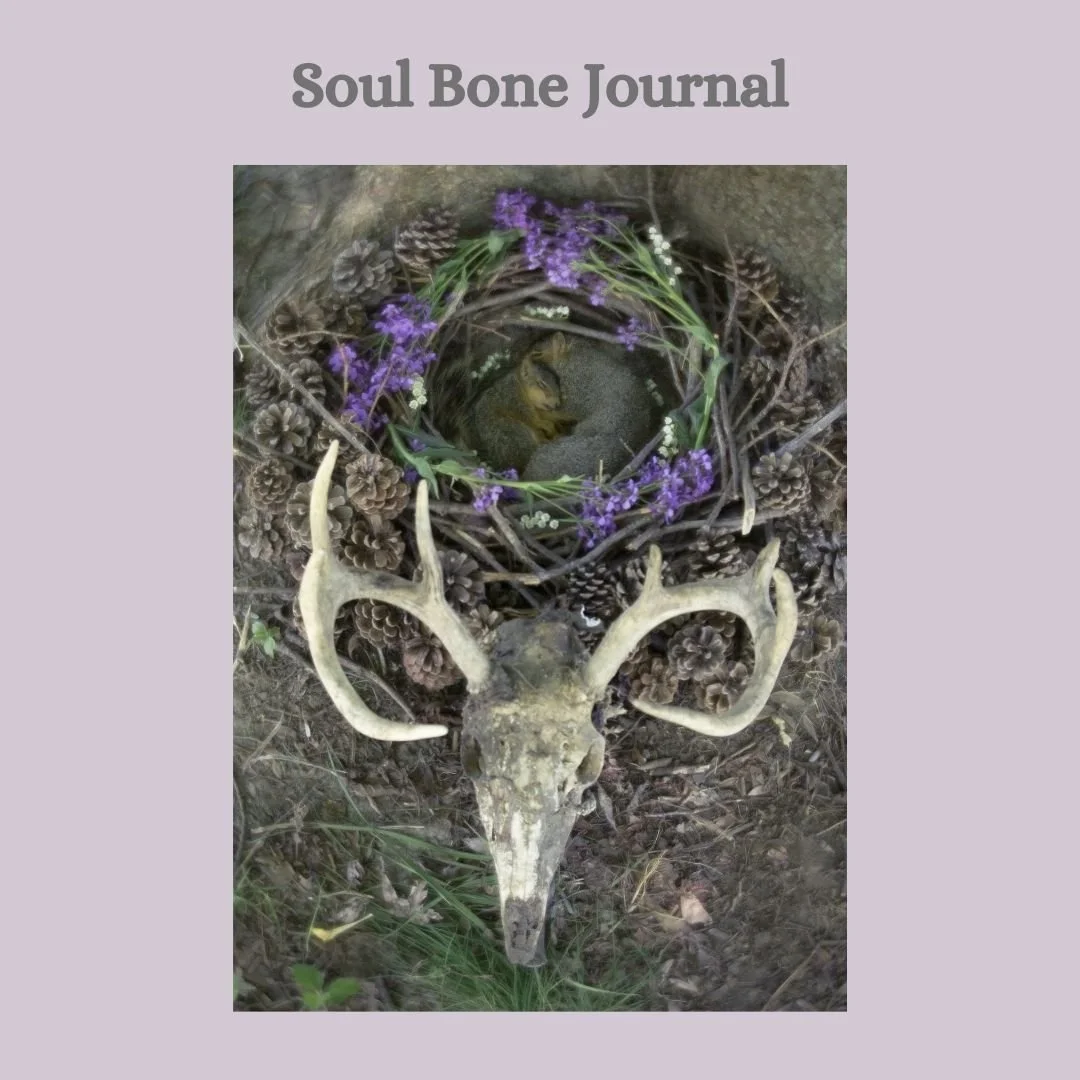
This course provides students with mentorship in literary magazine or anthology editing and an opportunity to solicit, review, and select submissions as part of a magazine's or an anthology’s operations. Editing, copy-editing, assembling submissions into a complete manuscript, presentation, marketing, and outreach are also part of the course. Different semesters may have a different focus: a new Conestoga Zen anthology or a new issue of one of MIU’s literary magazines, Soul Bone Journal or Metafore. Students can opt to take this elective in their second or third semester with the MFA Program Director’s permission. (Elective, 2 credits, online course)
-
In this directed study course, students can opt to work on a research project that is part of their thesis, a writing project (chapbook) in a different genre, professional preparation toward post-graduate career goals, an artist residency, a community outreach, or a creative project of choice. Students will work one on one with their faculty to flesh out a proposal and meet their own goals and deadlines. The course involves a portfolio or presentation to demonstrate that the learning objectives are achieved. May be taken several times for credit with the program director's permission. Recommended for students who need extra support to finish their thesis work
-
For students who want an additional literature credit on their transcript in preparation for a teaching job in a community college or university English department, we offer an elective literature seminar in the 5th semester that involves immersion in a subject of choice. This course is offered as an elective pending literature faculty availability. (Elective, 2 credits, online course) Prerequisites: LIT 593 Writing a Critical Introduction to the MFA Thesis, plus permission of the MFA Program Director
Mentorships
-
This Advanced Creative Writing mentorship offers full immersion in the craft and technique of poetry. Students write original work and receive intensive feedback in one-on-one mentorship and online workshops with the aim of revising their work in-depth. The course is tailored to each student’s specific needs and may emphasize closed and/or open form poetry, cross-genre or hybrid work, experimental poetry, long form poetry, prose poetry, and more. Students submit four packets of work (new writing and revisions) per semester. Weekly or biweekly online craft classes cover subjects such as the deep image; metaphoric thinking; the art of line break; rhythm, repetition and/or metrics; unwrapping form; and more. Students work on their thesis project unless the mentorship is an elective. Poetry students can repeat this course. (4 credits, online course) Co-requisite: LIT 560-570-580, a complimentary Advanced Process Mentorship in the same genre. Prerequisite: Students take mentorships in their chosen genre(s) of emphasis and are only allowed to enroll in elective mentorships with permission of the MFA Program Director
-
This process seminar focuses on reading and craft analysis in the genre of poetry in support of a student’s creative work. In each monthly packet submitted to the mentor, students are required to include a bibliography, annotations in response to about half to a third of the readings, and a first or final draft of an analysis essay exploring craft in a literary work. By the end of a semester, students have compiled a reading list of 10 – 15 titles relevant to their own writing process. There are four packet exchanges with the mentor per semester. Poetry students can repeat this course. (2 credits, online course) Co-requisite: CW 560-570-580, a complimentary Advanced Creative Writing Workshop in the same genre. Prerequisite: Students take mentorships in their chosen genre(s) of emphasis and are only allowed to enroll in elective mentorships with permission of the MFA Program Director
-
This Advanced Creative Writing mentorship offers full immersion in the craft and technique of fiction. Students write original work and receive intensive feedback in one-on-one mentorship and online workshops with the aim of revising their work in-depth. The course is tailored to each student’s specific needs and may emphasize short story, flash fiction, novel, novella, experimental fiction, and/or speculative fiction. Students submit four packets of work (new writing and revisions) per semester. Weekly or biweekly online craft classes cover subjects such as voice, setting, character, flashbacks, the art of dialogue, the narrative arc, multiple points of view, outlining, and more. Students work on their thesis project unless the mentorship is an elective. Fiction students can repeat this course. (4 credits, online course) Co-requisite: LIT 561-571-581, a complimentary Advanced Process Mentorship in the same genre. Prerequisite: Students take mentorships in their chosen genre(s) of emphasis and are only allowed to enroll in elective mentorships with permission of the MFA Program Director
-
This course focuses on reading and craft analysis in the genre of fiction in support of a student’s creative work. In each monthly packet submitted to the mentor, students are required to include a bibliography, annotations in response to about half to a third of the readings, and a first or final draft of an analysis essay exploring craft in a literary work. By the end of the semester, students have compiled a reading list of 10–15 titles relevant to their own writing process. There are four packet exchanges with the mentor per semester. Fiction students can repeat this course. (2 credits, online course) Co-requisite: CW 561-571-581, a complimentary Advanced Creative Writing Workshop in the same genre. Prerequisite: Students take mentorships in their chosen genre(s) of emphasis and are only allowed to enroll in elective mentorships with permission of the MFA Program Director
-
This Advanced Creative Writing mentorship offers full immersion in the craft and technique of creative nonfiction. Students write original work and receive intensive feedback in one-on-one mentorship and online workshops with the aim of revising their work in-depth. The course is tailored to each student’s specific needs and may emphasize flash nonfiction, personal essay, and/or memoir. Students submit four packets of work (new writing and revisions) per semester. Weekly or biweekly online craft classes cover subjects such as hybrids, the lyric essay, drawing upon life experience, fictionalizing personal stories, setting, character, the art of dialogue, the narrative arc, profluence, flashbacks, framed stories, and more. Students work on their thesis project unless the mentorship is an elective. Creative nonfiction students can repeat this course. (4 credits, online course) Co-requisite: LIT 562-572-582, a complimentary Advanced Process Mentorship in the same genre. Prerequisite: Students take mentorships in their chosen genre(s) of emphasis and are only allowed to enroll in elective mentorships with permission of the MFA Program Director
-
This course focuses on reading and craft analysis in the genre of creative nonfiction in support of a student’s creative work. In each monthly packet submitted to the mentor, students are required to include a bibliography, annotations in response to about half to a third of the readings, and a first or final draft of an analysis essay exploring craft in a literary work. By the end of the semester, students have compiled a reading list of 10 – 15 titles relevant to their own writing process. There are four packet exchanges with the mentor per semester. Creative nonfiction students can repeat this course. (2 credits, online course) Co-requisite: CW 562-572-582, a complimentary Advanced Creative Writing Workshop in the same genre. Prerequisite: Students take mentorships in their chosen genre(s) of emphasis and are only allowed to enroll in elective mentorships with permission of the MFA Program Director
-
This Advanced Creative Writing mentorship offers full immersion in the craft and technique of multiple genres. Students create original cross-genre or multi-genre work and receive intensive feedback in one-on-one mentorship and online workshops with the aim of revising their work in-depth. Students submit four packets of work (new writing and revisions) per semester. Weekly or biweekly online craft classes are tailored to each student’s specific needs with the aim of stimulating the student’s creative work. The purpose of the Multi Genre Workshop is to give students room to explore unfamiliar and/or complimentary genres and do experimental work. Students develop an appreciation of the three core genres and an understanding of how these genres can cross-fertilize and intersect. Dual genre students can take this mentorship multiple times to work on their thesis project. For other students, the Multi Genre Workshop presents an opportunity to stretch boundaries and explore new possibilities as an elective. (4 credits, online course) Co-requisite: LIT 563-573-583, a complimentary Advanced Process Mentorship in Multiple Genres. Prerequisite: Students take mentorships in their chosen genre(s) of emphasis and are only allowed to enroll in elective mentorships with permission of the MFA Program Director
-
This course focuses on reading and craft analysis in multiple genres in support of a student’s creative work with particular emphasis on the borderlands between genres, including cross-genre and hybrid work. This course stretches boundaries, inspires new ideas, encourages experimentation, and gives students the opportunity to explore genres that are unfamiliar. In each monthly packet submitted to the mentor, students are required to include a bibliography, annotations in response to about half to a third of the readings, and a first or final draft of an analysis essay exploring craft in a literary work. By the end of the semester, students have compiled a reading list of 10 – 15 titles relevant to their own writing process. There are four packet exchanges with the mentor per semester. Students can repeat this course with the MFA Program Director’s permission. (2 credits, online course) Co-requisite: CW 563-573-583, a complimentary Advanced Multi Genre Workshop. Prerequisite: Students take mentorships in their chosen genre(s) of emphasis and are only allowed to enroll in elective mentorships with permission of the MFA Program Director
-
In the capstone semester, students enroll in the MFA Thesis course, an advanced mentorship designed to complete a book-length manuscript of publishable quality. Students are required to complete four packet exchanges but also work one-on-one with their mentors, participate in intensive workshops, and engage in in-depth revision to finalize their drafts. This course may include workshops on how to intentionally and thematically organize and structure creative work so it shapes into a cohesive collection or whole. The final draft of the thesis follows MLA formatting guidelines. The MFA Thesis is always in the student’s genre of emphasis, and dual genre for approved students only. If students need more time to complete their thesis work, this course can be followed by CW 594 Extended MFA Thesis. (Required, 4 credits, online course) Co-requisite: LIT 593 Writing a Critical Introduction to the MFA Thesis Prerequisite: CW 580, 581, 582 or 583
-
In the fourth semester of study, the Advanced Process Mentorship fully supports the completion of the MFA thesis. Instead of craft analysis and critical essays, students write a critical introduction to their thesis, giving their creative process and craft choices a literary and scholarly context. Students are expected to refer to ideas and techniques discussed in The Flow of Consciousness to enrich their explications. In each monthly packet, students include a draft of a portion of their introduction, then use mentor feedback for revision. The final draft of the thesis introduction should include MLA citations and a Works Cited page. (Required, 2 credits, online course) Co-requisite: CW 593 MFA Thesis Prerequisite: LIT 580, 581, 582 or 583
-
For students who need extra time and support to complete their thesis, we offer the Extended MFA Thesis mentorship. Dual genre students may opt to enroll in the Extended MFA Thesis to immerse more deeply in their second genre of emphasis. Students are required to complete four packet exchanges but also work one-on-one with their mentors, participate in intensive workshops, and engage in in-depth revision to finalize their drafts. This course may include workshops on how to intentionally and thematically organize and structure creative work so it shapes into a cohesive collection or whole. The final draft of the thesis follows MLA formatting guidelines. The Extended MFA Thesis is the same course as CW 593 but may be taught by a different mentor. It can be repeated for credit until the student has completed the thesis. (Elective, 4 credits, online course) Prerequisites: CW 593 MFA Thesis and LIT 593 Writing a Critical Introduction to the MFA Thesis
-
For students who need extra time and support to complete the critical introduction to their thesis, we offer the Extended Writing a Critical Introduction to the MFA Thesis, which is the same course as LIT 593 but may be taught by a different mentor. In each monthly packet, students include a draft of a portion of their introduction, then use mentor feedback for revision. The final draft of the thesis introduction should include MLA citations and a Works Cited page. This course can be repeated for credit until the student has completed the critical introduction to the thesis. (Elective, 2 credits, online course) Prerequisites: CW 593 MFA Thesis and LIT 593 Writing a Critical Introduction to the MFA Thesis